What Is A Good Target for Participant Compliance In A Study?
Last updated: August 5, 2026
There are a number of factors to consider when discussing study compliance.
Participant Compliance is a percentage value calculated by dividing the total number of assessments completed by participant by the total number assigned, multiplied by 100. This number expresses how diligent participants are being in filling out assessments, questionnaires and surveys that have been assigned to them.
Participant Completion or Retention is the number of participants who have completed the study, from beginning to end.
Pro-Tip: Every study is different, but as a best practice target 80% to 85% as your minimum compliance rate per participant, and for overall study completion.
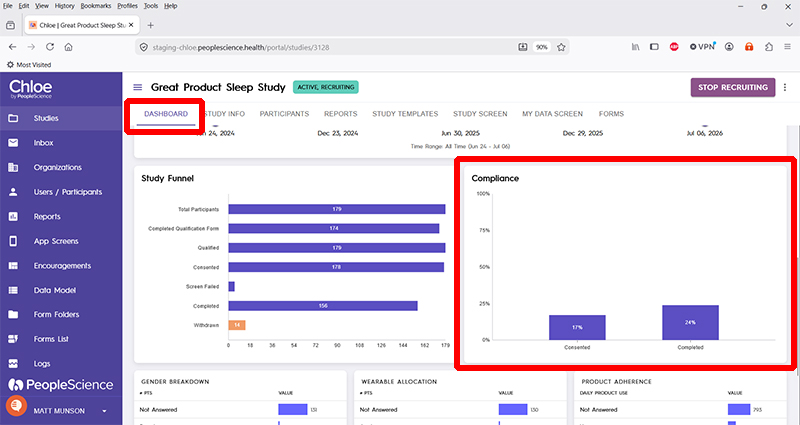
The Dashboard tab in your study has in it a chart that will tell you compliance for all participants that have consented and and all participants that have completed the study.
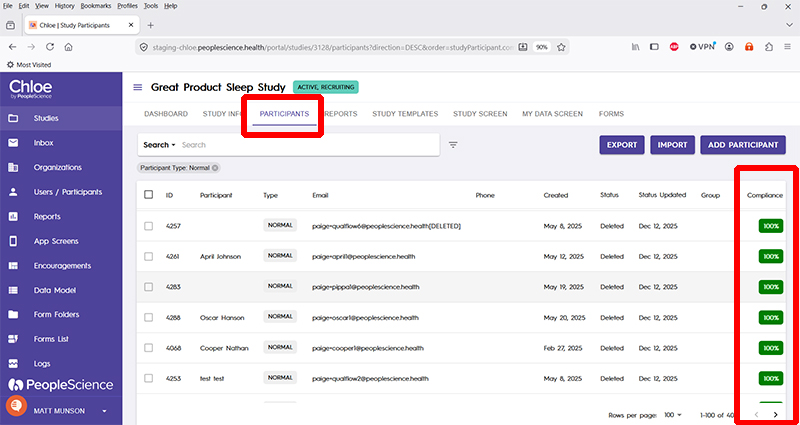
The Participants Tab displays each individual participants Compliance Rate. You can filter this list to quickly identify participants who are below your target compliance threshold, and then use Chloe's built in bulk communication tools to engage with them directly to improve compliance.
Here's what some of our Clin-Ops leaders have to say on the topic:
"In my general experience, the standard goal is 80% or higher participant retention and compliance. This does vary across participant populations and therapeutic areas, as well as length and complexity of the study as well. But typically we aim for at least 80-85% or higher" - Lisa Capano-Wehrle, Head, Clinical Operations
"We typically want >80% of participants to be compliant. The better the data compliance, the more data you can include in your analysis. There really isn't a normal and it depends on your patient population, following up with participants when you see them being non-compliant, and burden of the questionnaires day to day. During data analysis, you will have to set a cut-off of how many participants to exclude from the analysis of that endpoint if there's not enough data that is available." - Crisel Erfe, MD, Strategic Operations & Solutioning